Difference Between Credit Cards, Debit Cards, Prepaid Cards, and BNPL in the Philippines
/
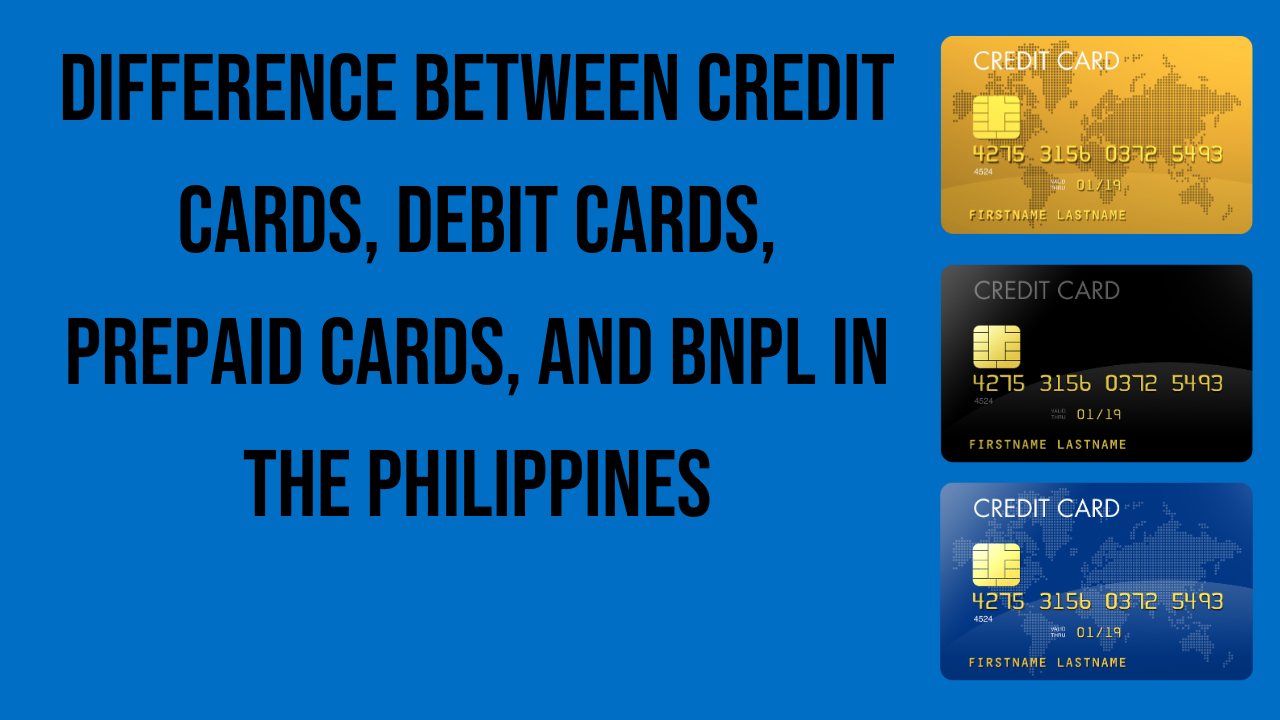
Difference Between Credit Cards, Debit Cards, Prepaid Cards, and BNPL in the Philippines
Managing money today is easier than ever but its also more confusing. With so many payment options like credit cards, debit cards, prepaid cards, and BNPL (Buy Now, Pay Later), it can be overwhelming to choose the right one.
If youre new to using cards in the Philippines, this guide will help you understand how each payment method works, their pros and cons, and when to use them so you can make smarter financial decisions.
Overview: The Four Payment Options in the Philippines
Feature
Credit Card
Debit Card
Prepaid Card
BNPL(Buy Now, Pay Later)
Source of Funds
Borrowed from the bank
From your own bank account
Money you load into the card
Borrowed from BNPL provider
Spending Limit
Based on your credit limit
Based on your available balance
Based on your loaded amount
Based on your approved BNPL limit
Payment
Pay later (full or installment)
Instant deduction
Preloaded spending
Pay later, usually in installments
Interest
Yes, if you dont pay in full
No interest
No interest
Sometimes 0% promo, otherwise interest
Best For
Rewards, emergencies, large purchases
Everyday expenses, bills, groceries
Budget control, online safety
Flexible installment shopping
What Is a Credit Card?
A credit card lets you borrow money from the bank to make purchases, pay bills, or shop online. You can pay your balance in full before the due date or pay in installments.
How It Works
Use your card to buy something ex. 5,000 groceries.
You have 3045 days to pay back without interest if you settle the full amount.
If you pay less than the total, the bank charges interest (usually around 3% per month).
Pro Tip: Use our Credit Card Cost Calculator to check how much interest youll pay if you dont settle your balance in full.
A debit card is linked directly to your bank account. When you spend, the money comes straight from your balance no borrowing involved.
Example: If you have 10,000 in your BPI account and use your debit card to buy 3,000 groceries, your balance immediately goes down to 7,000.
Pros of Debit Cards
No interest charges
Great for daily spending like bills, groceries, and gas
Easy to manage you cant spend more than you have
Cons of Debit Cards
No rewards or cashback (in most cases)
Limited fraud protection compared to credit cards
Less flexibility in emergencies
What Is a Prepaid Card?
A prepaid card is like a reloadable wallet. You load money onto the card first, and then you can spend up to that amount.
Prepaid cards are usually offered by banks like BDO Cash Card, GCash Mastercard, and PayMaya Visa.
Example: You load 5,000 into your GCash Mastercard. Thats your spending limit you cant spend beyond that.
Pros of Prepaid Cards
No credit checks anyone can get one
Safer for online shopping since the risk is limited to your loaded amount
Perfect for budgeting
Cons of Prepaid Cards
No credit-building benefits
Limited perks and rewards
You need to manually load funds
What Is BNPL (Buy Now, Pay Later)?
BNPL is a new payment option offered by providers like Billease, Atome, and Home Credit. It allows you to buy now and pay in installments even without a credit card.
Example: You buy a 10,000 phone using BNPL. The provider approves you for 3 months to pay 3,333/month often with 0% interest (promo-based).
Pros of BNPL
Easy approval, even without a credit history
Flexible installment options
No credit card required
Cons of BNPL
Can lead to impulsive shopping
Missed payments can hurt your credit standing
Interest applies if you miss promo deadlines
Credit Cards vs. BNPL: Which Is Better?
Feature
Credit Card
BNPL
Approval Process
Stricter, requires documents
Easier, fewer requirements
Rewards
Yes, cashback & points
Rarely offers rewards
Installments
Yes, up to 24 months
Yes, usually shorter terms
Impact on Credit
Builds credit score
Limited effect on credit
If you want long-term flexibility and rewards, a credit card is better. If you just need short-term, small installments without a bank approval, BNPL is a good start.
When Should You Use Each Payment Method?
Situation
Best Option
Why
Daily expenses like groceries, bills
Debit Card
You spend what you have
Online shopping & safety
Prepaid or Credit Card
Limits exposure to your bank balance
Emergency medical bills
Credit Card
Gives you access to instant funds
Buying gadgets or appliances
Credit Card or BNPL
Flexible installment plans
Budget control & limiting spending
Prepaid Card
You decide your limit
Common Mistakes to Avoid
Using a credit card like free money Always pay in full if you can
Relying on BNPL for everyday purchases Leads to debt stacking
Not tracking your spending Use budgeting apps or monitor your statement
Paying late Penalties + interest charges add up quickly
TL;DR (Quick Summary)
Credit Card Borrow now, pay later, earn rewards
Debit Card Spend what you have, no interest
Prepaid Card Load first, spend later, safer for budgeting
BNPL Buy now, pay in small installments, often without a credit card
Hospital delivery in the Philippines can easily cost ₱60,000 - ₱200,000 depending on the hospital and type of delivery.
Many parents use a credit card to manage these expenses while waiting for their SSS maternity benefits.